W O R D S
Running Trials and Triumphs
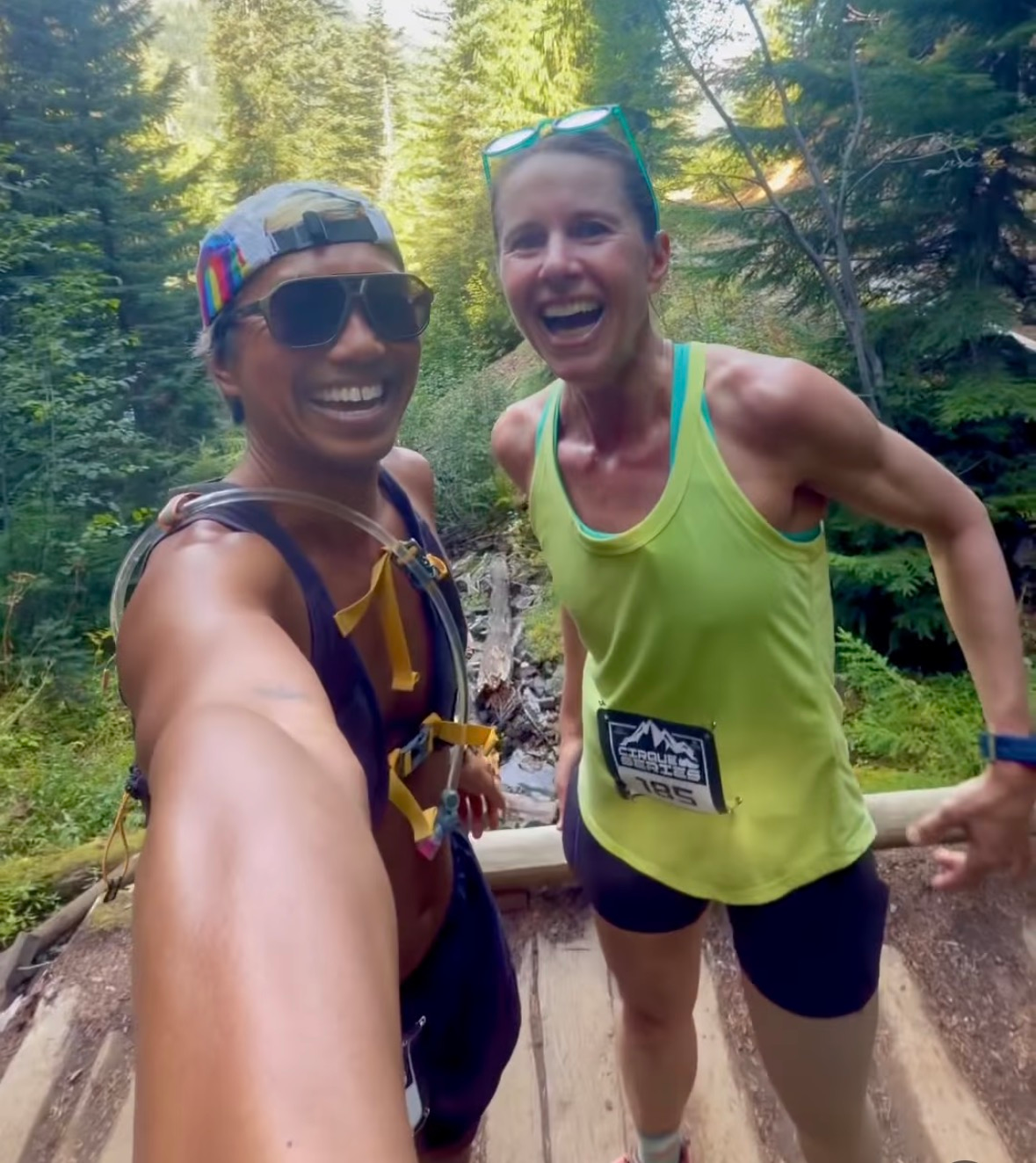
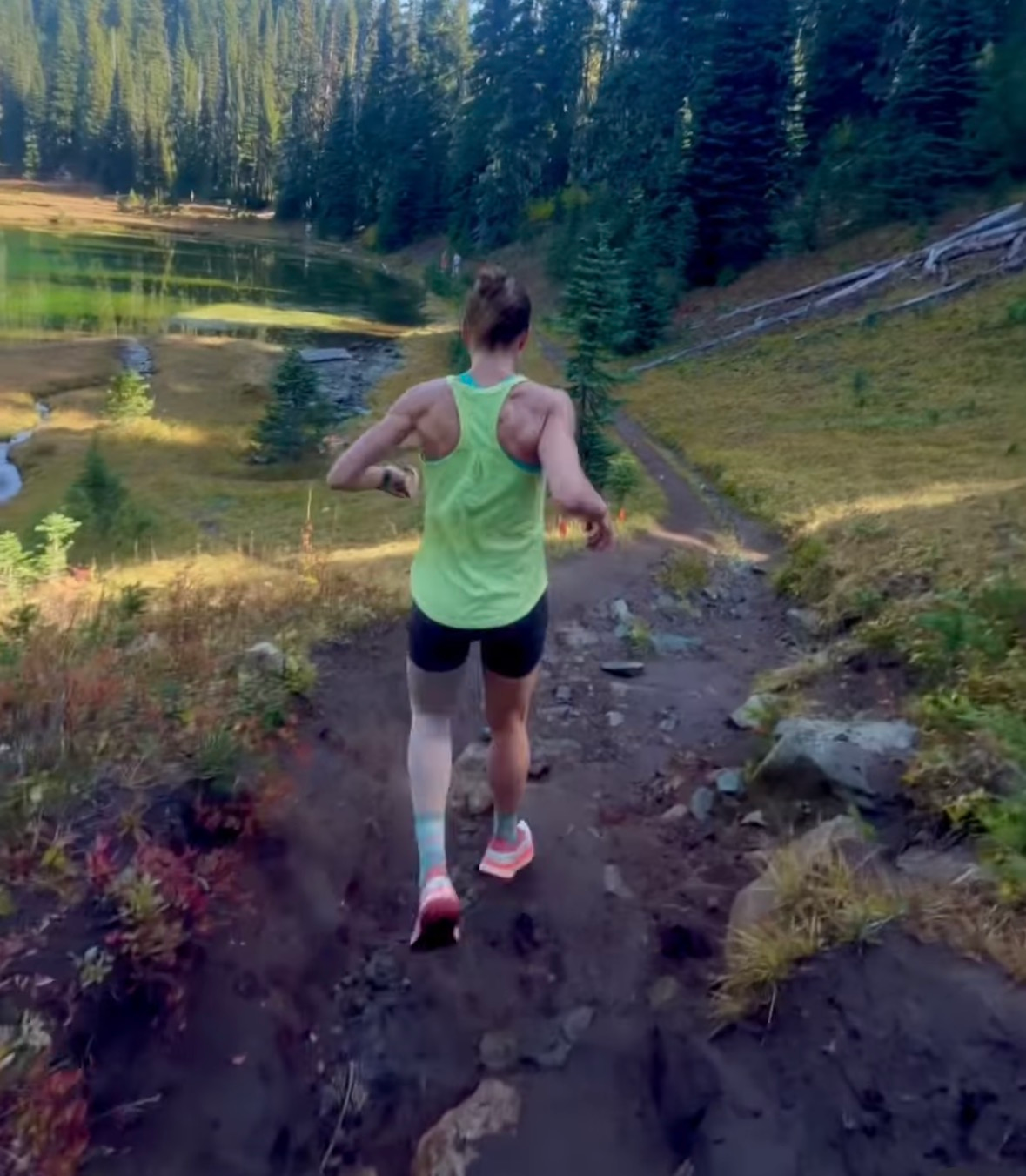
I’ve had a lot of time to process Parkinson’s affect on my running over the past year and I figured I’m at a place where I am finally ok to share some of this. Running is a sport I have loved for over 35 years. Running has always been a source of one of my greatest joys, my go-to coping mechanism, and my favorite thing to do anywhere in the world. At many times in the past several years it has felt like Parkinson’s is so unfairly stripping this away from me, at a time when I need it most.
All the Feelings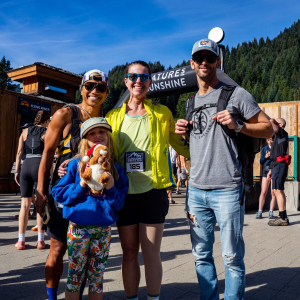
For months after my diagnosis every Sunday I would ride my bike along the coast. My legs worked well on the bike, unlike my awkward run stride, so it was an enjoyable activity. But every time I saw a runner I was angry. This was problematic because on the coast on the weekend there are a LOT of runners, and I didn’t want to be angry. I was angry because I figured the person I saw running probably wasn’t enjoying their ability to run. I was angry that I wasn’t running effortlessly. I saw photos of my friends running and got sad. My husband would go to a race or out to run, which I encouraged him to do and he needed to do, but it was hard. I missed running with my old run friends. And yet I also realized to get to the other side I needed to go through all these feelings. And then finally one day on my bike ride I passed a runner and enjoyed watching them run, without being angry.
Dark Closet Runner
I went through a period of about a year where I was absolutely mortified if other people saw me run. I had developed an awkward stride which often resulted in people I didn’t know stopping me and asking if I was injured. It was kind of them, but all I heard was “You look really strange when you run!” I had a disability and I looked like I had a disability. I fell in love with the safety of darkness on my 5am runs. Nobody saw my slow and awkward start to the run. Nobody saw my weird arm swing or looked at me as if I was a crazy person who was injured but refused to stop running. It was isolating, but felt very safe. Over time I got brave and when someone asked “Are you injured?” I just laughed and replied “Oh no, I have Parkinson’s and always run like this – would you believe it’s actually working well today?!” It left me feeling a bit happier and most people applauded my efforts.
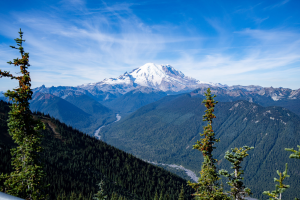 Sing Like an Opera Star!
I spent multiple months trying to keep my foot dystonia from kicking in at the start of a run. I tracked what I ate, how much dopamine I took before a run, how much time the dopamine had to actually start working before I ran, what warmup I did, and on and on and on. I had charts and graphs and variables I tracked. I read up on dystonia and how to best get rid of it once it kicks in. I learned getting angry at dystonia makes it worse. I learned singing loudly helps it go away. And if singing doesn’t make it go away it’s pretty hard to be angry at your foot that isn’t working when you’re pretending to be an opera star on the side of the road at 5am. So I sang, and I laughed at the absurdity of my disease. And I made small changes. And over time I had less and less dystonia run disruptions. This felt like a gigantic win!
Medication Learning Curve
For someone who never took medication at all, after diagnosis I had to get used to not only taking medication every day, but learning how and when to take it. My body doesn’t make enough dopamine and thankfully science is amazing and there are dopamine pills I can take. It doesn’t fix the Parkinson’s, but it helps a lot with symptoms and it helps me run better. I learned to play around with my dopamine doses and figure out when to take a 1/2 tablet more for a longer, harder run. And sometimes this doesn’t work – several times I have taken my dopamine dose and it makes me so nauseous I throw up before I run. Thankfully when this happens it seems my body still ingests the dopamine before I throw up because each time it has happened I ended up having a decent run anyway.
Changing Motivation
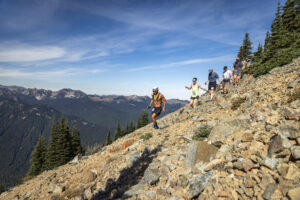 For many years I raced at a high level and was continually motivated by the process of training hard and making small gains. One of my favorite parts of racing was putting in the work and eventually seeing results. Parkinson’s does not follow these rules. All of a sudden I found myself working harder than ever and getting slower, regressing, and making zero progress. It is completely demotivating. In the spring after a particularly difficult run I started asking myself “WHAT is the freaking point?!” I could swim or do a number of way easier-to-do-with-Parkinson’s sports. Except I do still love running. And I know what the freaking point is – excercise is the #1 best thing you can do for Parkinson’s to slow the progression and help symptoms. I also knew if I walked away from running I would feel like I had let Parkinson’s win, so it was not an option for me.
So I decided I needed a new goal. Maybe a race? Except there was that small detail that I was still fairly terrified of anyone watching me run. Therefore voluntarily putting myself into a group run with other people and spectators sounded like a nightmare. But a trail race could work. Nobody spectates at trail races. And the other racers are too busy looking at rocks, roots, or catching their breath to look at me. Perfect!
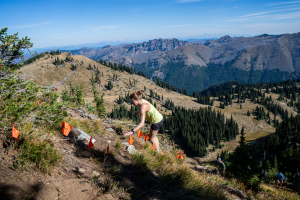 I picked out an 8 mile trail race in Washington with 2,600 feet of climbing. Not too long, but sufficiently hard to feel I had accomplished something. The race had a climbing cutoff – you had to make it past the top of the gondola (3.5 miles, all the climbing) before 1.5 hours or you would get sent down the gondola – the ride of shame! Although running is often really hard for me, I’m fairly good at power hiking and after doing some math I thought I could make this cutoff. It scared me, but it seemed like a good challenge. Now I just needed a wingman. Enter Kiet, BFF extraordinaire, one of only two people who were present at Eric and my wedding ceremony mid-run, and one of my favorite people on earth.
As summer got muggy and hot I learned another one of the fun side effects of Parkinson’s is trouble regulating body temperature. My running got even slower. But having that little goal kept me going. I played around with some steep hill hike up / run down workouts that were actually fun.
Trail Race
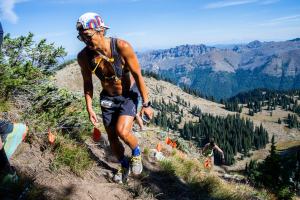 It had been 7 years since I entered a race. I had zero goals other than to finish, have fun, and seeing as Parkinson’s makes me a tripping hazard, try not to face plant on the trail. Kiet and I had last raced trails in Austria together, and I knew we would have a blast no matter what. Turns out the race format was perfect for me. When I run it can take up to an hour before I’m warmed up and my leg even starts working a bit better. Since this race started with a steep uphill climb, by the time I had power hiked to the top I was warmed up enough that I could run almost all the trails down. It was really fun to see my husband and daughter at the top of the mountain, and again at the finish where she got to run the final section with us.
I tend to do best with uphill and downhill – flats are hard. This race had almost no flat ground, so that was great. The race was so fun – I felt normal, I felt strong, and I felt like I could compete even with my leg not always working, and the terrain was beautiful. I didn’t finish last, and I didn’t fall. It made me feel more alive than I have in months. In the end we finished under 2 hours, which was faster than I had thought possible.
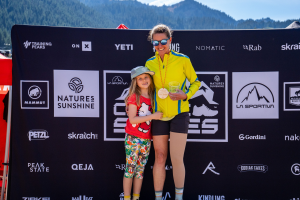
I was awarded the Lexie Award for being an inspirational runner. This was a really nice acknowledgement of how hard running with Parkinson’s is and if somehow I am inspiring someone else to get outside and run, this makes me happy.
The Shift
Probably the best part of the race was the shift I felt in realizing I can still do these things I love. I don’t have to give up running or racing. I can get over my fear of looking weird when I run. I can fly downhill on a trail without tripping. I can laugh at my BFF as he is cursing because we are going up an insanely steep hill, and this was my idea of fun. I am still the same person, I just have a leg that I often have to drag along for the ride. I plan to carry this shift into some new running goals, some of which definiteily scare me, but if they help me to keep showing up then I think they are perfect.
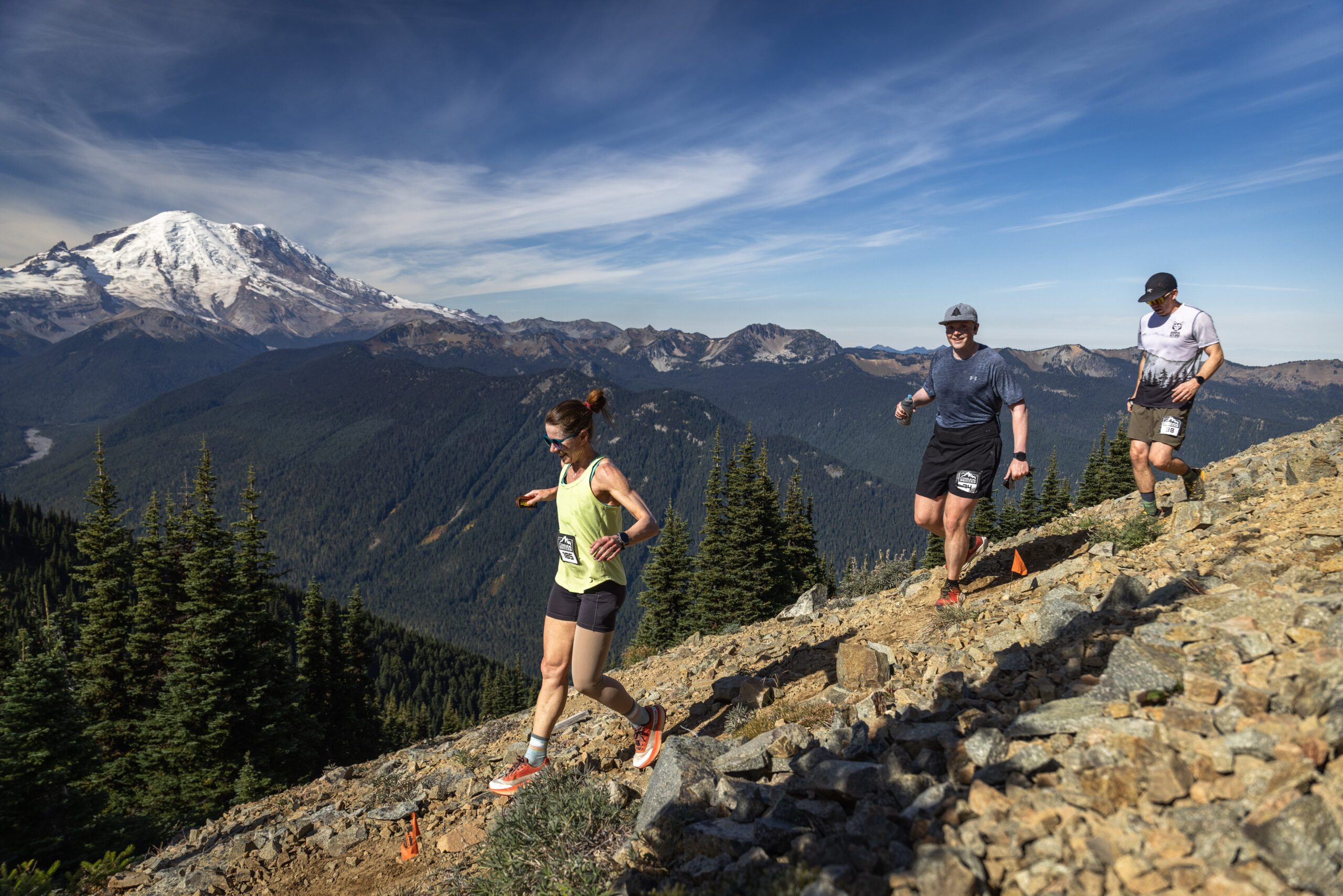
Photos: Kiet Tran, Rocko Menzyk and Brady Rufner at Cirque Series Crystal Mountain.
Parkinson’s
The Diagnosis:
 I’ve written this post at least 522 times during a run in my head, but when it’s time to type it I always find something better to do.
Over a year ago on January 13 (shockingly not a Friday!) I went to the Doctor for what I was sure was a pinched nerve in my shoulder and left with orders for a brain MRI, DAT scan, blood tests, a test where I had to collect all my pee for 24 hours in the fridge and take it to the doctor (not making this up!) and the newly acquired info that the doc thought I had Parkinson’s, but wanted to make sure.
 In my 40s? I have no family history. I don’t even know what Parkinson’s is! I thought it was a death sentence. The doc instructed me NOT to Google Parkinson’s or join a Facebook group (I didn’t) and promised if it was Parkinson’s there was medication that could help me live well for many years, and might help me run better. That tidbit about possibly helping my run gave me some hope, while I simultaneously freaked out as multiple tests were performed. Our daughter was in Kindergarten at this time and all I could think was NO, NO, NO she is too young! I am too young! Mixed with “I don’t want to be in a wheelchair when she’s in high school!!!” (This was the only thing I knew about Parkinson’s – that people end up in wheelchairs sometimes).
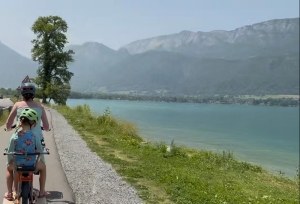 There were so many tests and a lot of waiting. I figured out what exact disease was being tested for and quickly realized many of those do NOT have great life outcomes. I won’t go into all of them, but fairly quickly I learned that of all the many diseases being thrown onto the table, Parkinson’s actually might be the lesser of evils in terms of the ability to live well and for a long time with my family.
Pre-Diagnosis:
 Let’s back up to where I was the day I went to see the doctor. In January 2025 I was only 8 months removed from my 6th and final surgery for lymphedema, where over the course of seven years doctors had re-routed the lymph vessels in my leg to drain into the blood vessels. Over this time my running had regressed. This was a problem for me because I LOVE to run. I didn’t want to race anymore or even be competitive, but I wanted to go out and enjoy running. I was frustrated and assumed that the problem with my uneven run stride stemmed from the fact that at one point my left leg had been heavier than my right (due to swelling from lymphedema). I had also been forced to take many 12-week breaks from running after every surgery to allow the lymph vessels to heal.
 Two years prior to my “You might have Parkinson’s” doctor visit I’d started PT to help correct issues I was having with my uneven run stride. I went to so many PT appointments. I got really strong. But I wasn’t running better.
I then started to notice that in the pool, my right arm was not pulling any water. And when I tried to place it in the water where I wanted to, it ended up somewhere else. My shoulder was really tight and this is how I came to the assumption that I must have a pinched nerve.
Shock & Recovery:
Turns out Stress makes Parkinson’s symptoms WAY worse. So as you’re being told shocking news that “You have Parkinson’s!” your symptoms dive off a steep cliff and get worse. Much of January – March last year is a blur to me.
 My 110 year old grandmother passed away at the end of February and as much as I wanted to fly back to Michigan for her funeral, I just didn’t have it in me.
The scariest part about Parkinson’s (for me) is that every doctor will tell you “It’s a progressive disease and there is no cure.” It’s very doom and gloom in terms of “It will keep progressing.” Once I got over the shock of the diagnosis, got on some dopamine medication, and was mostly living a normal life, I knew the one thing I needed help with was my mental state. I kept waking up at 3am and stressing about my future. The future I had seen myself in where I ran races and marathons in my 70s was being re-written, but I had no idea by what. What was going to happen to me? Was I going to end up in a wheelchair? Is my daughter going to have a Mom that can do things with her? It’s an endless rabbit hole. And NOBODY knows. I figured I should educate myself and started reading up on Parkinson’s, but that also became a problem because Parkinson’s has about 500 symptoms, many of which I will not get. Every case is very different. So I was reading a billion awful symptoms, some of which I will get, and some of which I won’t. What I needed was some living people who had Parkinson’s and had experience that could show me life was going to be ok. I desperately needed to know I was going to be ok.
Thankfully I found a mentor program and reached out. I talked with two ladies who were diagnosed around my same age and each has had Parkinson’s 15-25 years. They are happy, and healthy, and active with very full lives. They are not in wheelchairs. I asked them both for tips on how to stop stressing about my future. And the one who has had Parkinson’s for 25 years told me “I’m living proof because imagine if I had spent the past 25 years freaking out about my future, that would have been a waste of time!” And she was right. She was proof I could do this. It didn’t happen overnight, but I did stop freaking out about the unknown future.
The neurologist told me that the best medication for Parkinson’s is exercise. Good news, I am good at exercise!
So how does Parkinson’s affect me?
Physical:
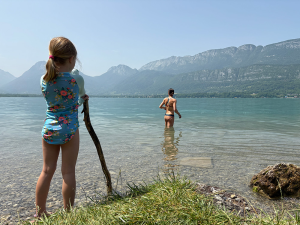 There are many little things that don’t bother me much at all. Sometimes I make more mistakes when I type. Sometimes brushing my teeth is a bit awkward. When I get cold and shiver my right hand will shake a lot and it’s hard to stop shivering. There are many small things that I know are from the Parkinson’s, but I can push them aside and not let them get to me. The harder ones for me are all related to my ability to do the sports I love. When I went to the doctor I had quit swimming masters and honestly swimming was a disaster. The prescribed dopamine helped with this a lot. And neuroplasticity of the brain is amazing. I basically re-learned how to swim with different techniques that work. For example I started thinking about reaching my arm really far right to the lane line, and it would end up in front of me where I wanted it to. I’ll never be able to swim how I could before Parkinson’s, but I’m able to swim masters with my friends again and that feels like a huge win.
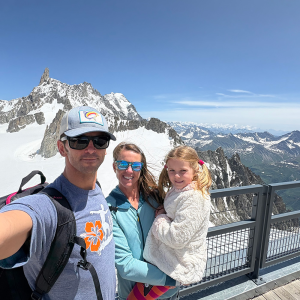 Running was also a disaster when I got diagnosed. I could skip great, but running was very hard. In a normal person with no Parkinson’s, running is something that you don’t have to think “pick up right foot, move it forward, move left foot, etc. etc.” Parkinson’s strips away those automatic movement skills. I’ve spent the entire last year going to Neuro PT to try to fix my wonky run stride and re-learn how to run. I’m certain most people would have long ago tossed in the towel on running completely, but I love it so much I just can’t. I currently have two major problems when trying to run. The first is that in the early miles I often get foot dystonia, which is where my foot cramps up and turns in toward the left and I just can’t run because my foot is stiff and crooked. It’s kind of like the foot has a massive cramp in it. I have to stop and stretch out my foot and calf and try to get it to relax before I can attempt to run again. Whereupon it often just seizes up again. I can do jumping jacks all day or hop, but as soon as I try to run forward, the foot will seize up. Some days this doesn’t happen at all, other days it happens for 1-4 miles before I can get the foot to relax. Once it goes away on that run thankfully it does not return. But sometimes I spend what feels like the entire frustrating run trying to get the foot to relax. The other biggest problem with my run is that my right leg can’t keep up with the left. The signal from my brain doesn’t reach the leg in time. So for months I was basically galloping and developed some bad habits. Through neuro PT we have corrected most of those. We also addressed the issue where I kept tripping on runs because I couldn’t pick up my right foot enough. I have made progress and although everything I do is a run / walk and sometimes my right leg is merely being dragged along on the ride, I am happy to still be outside attempting my version of running.
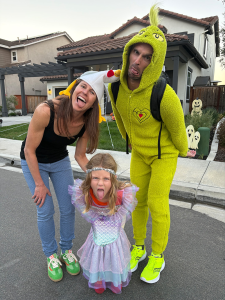 The best advice I ever read regarding Parkinson’s (but could be applicable for anyone) was “Focus on what you can do, not what you can’t.” It is so helpful. There are so many days where running is so hard and I am angry, sad, mad, etc. about this problem. I often wonder “How did I end up here?!” But if I can focus on the fact that I am outside or I can hear the owl hoooo-ing at me, or enjoy the sunrise, or appreciate that I am able to swim (even though I’m so slow!), or that I have an amazing daughter to play with, and a husband who is incredibly supportive of this crap diagnosis, I usually feel better.
Mental:
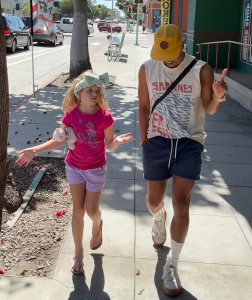 The mental mind shift of all of this is insane. The appreciation I have for my family and very close friends and how much closer we got over the past year has increased ten-fold. Many little things with my daughter became so much more special –I realized it could have all been stripped from me and the fact that I am here and able to participate in all of it is not lost on me. So yes, we took the trips, we remodeled the house, I am doing it all because today I can.
Parkinson’s and the way it presents itself (constantly changing, hard to figure out, frustrating) can be a complete mind-fuck. Any small new symptom can quickly lead my mind to freak out and spiral into “OMG it’s progressing and this is going to become my new normal and I am NOT ok with this!” But at the same time I’ve learned to quiet that voice and know I’m strong enough and smart enough to figure it out. And focus on the good that is in today. Not the questions of tomorrow and the unknowns, but what is in front of me today.
What I Need:
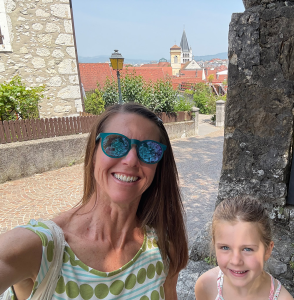 So why share this at all? I’ve struggled with whether or not to share this. I don’t love that it’s great gossip material. I don’t want people to feel sorry for me. I’ve had plenty of my own pity parties and I don’t want other people to pity me. I do however want all the empathy. So much of this is SO. FUCKING. HARD. Having that recognized is difficult when you don’t share it with anyone. And I could definitely use some “You’ve Got This!” in my life. I don’t want people to look at me differently. When I’m out and about day to day nobody would guess I have Parkinson’s and I love that because it makes me feel “normal.” I am scared that after sharing this people will treat me different. But I also feel good when people who already know ask me questions about how I’m doing or what it’s like. Sharing helps me feel less isolated. I am still strong, and smart, and capable, but I also now have to admit that certain things are much more difficult. I am embarrassed to have a disability. Sometimes when I’m out running people will stop and ask “Are you ok? It looks like you’re limping!” It has always made me feel like I must look like some freak while trying to run, even though I know they probably think I went out for a long run and injured myself and might need a ride home. They are being kind and I appreciate that.
I chose to share this because I have always greatly appreciated real people. I want to be real. And if somewhere along the way I can help someone else with similar issues that would be amazing. Or if any of you know someone with Parkinson’s who is kicking ass at life and could help me out, or is a runner with Parkinson’s by all means put us in touch. Community isn’t built by hiding behind a wall.
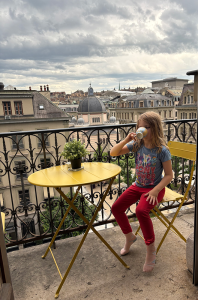 In my mind I’d like to think as I journey down this new path that I will be able to share more of the trials and triumphs and help others, or maybe inspire someone to keep at it with their own problems, because life is hard in so many ways for all of us and we typically don’t know most people’s struggles. I’m not sure yet how much sharing I’ll be good at because I’m still wrapping my head around my new life reality. What I do know is that I am trying to appreciate so much more of the good, while sifting out the not-so-great. Kind words always help me and I know they help others – so be kind!
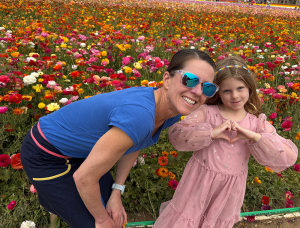
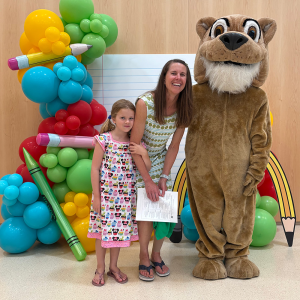
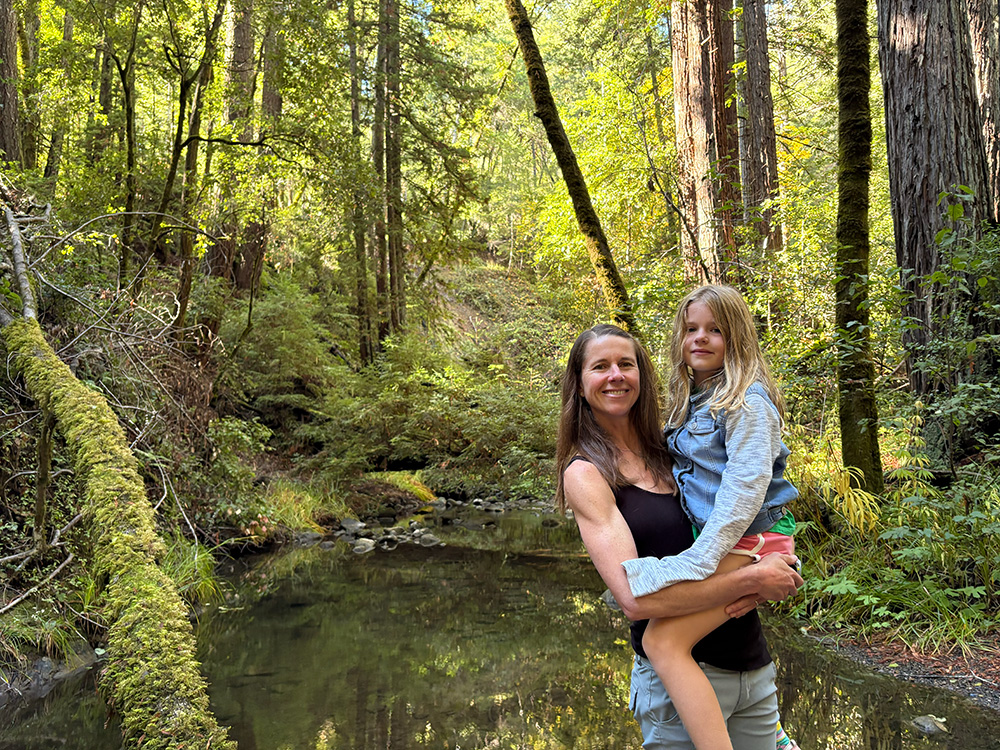
The photos in this post are some of my very favorite memories in what was a very difficult year, but also an amazing year.
Thanks for the love and support.
Charisa
Singing Sea Otters
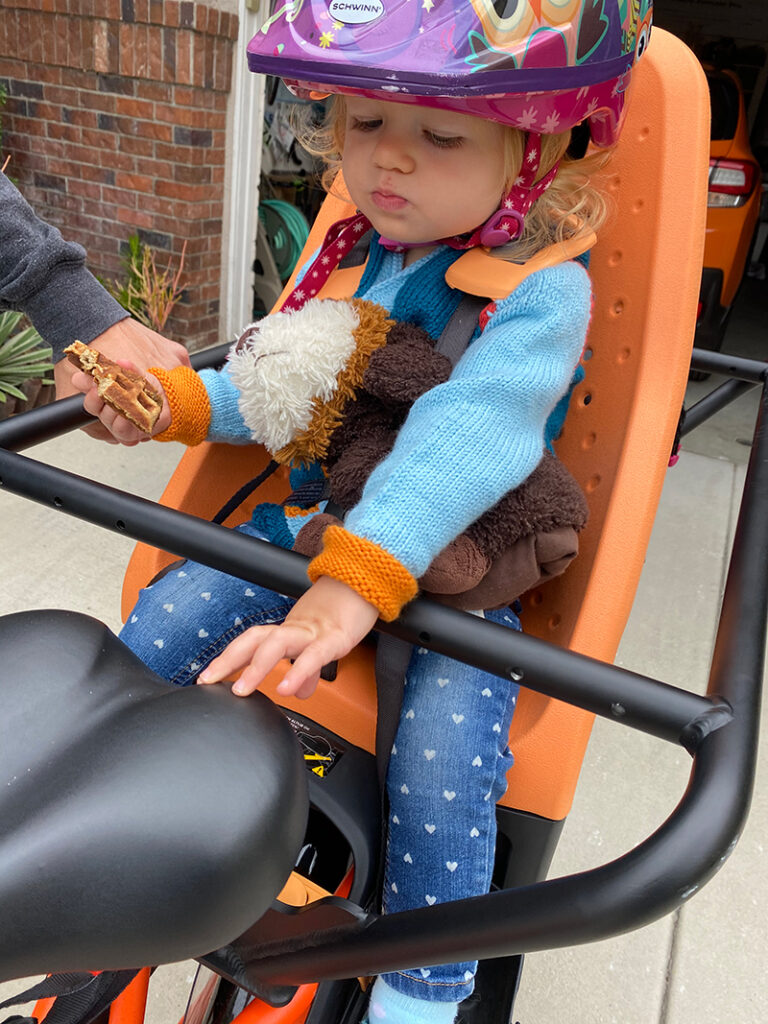
Somehwere in the midst of our COVID lockdown my husband and I found ourselves making dinner wearing bike helmets, trying to convince our 15-month-old that wearing her new owl helmet was fun. Ever since she was about six months old I had dreamed of taking her on bike rides, since this is something I love and have probably spent more hours of my life doing other than running.
Thankfully it didn’t take long for her to realize bikes are fun and thus began our new commuting routine. Every morning we get on the bike with waffles and Mr. Sea Otter and we ride to Grandma’s house. However, we do not just ride the bike. We ride while singing. I never realized how fun singing while riding a bicycle is!
Next time you find yourself in the midst of a global pandemic with a crashing economy (or perhaps just having a bad day), I urge you to go ride your bike and sing loudly. Any song will do. Christmas songs, Itsy bitsy spider, Wheels on the Bus, Sound of Music songs, etc. Also – don’t stop singing when you pass people walking their dogs, or stop next to someone at a light with their windows rolled down. You will make them laugh and might spread some of that happiness around.
2020 has definitely been a strange year so far, but I am enjoying trying to embrace the new routines and things we have found joy in that we otherwise might not have discovered. This list includes gardening, more ocean swimming with fish (and the unnamed creatures), farm boxes, more home cooking, and getting creative with take-out picnics or any activity with a 1.5 year old. I hope everyone is hanging in there. I miss friends a lot, but I am grateful for health and the little things that bring joy. Like singing with otters.
Revisiting Travel
For the better part of 8 years I raced and traveled all over the world. At the time I was incredibly busy. Training took a lot of time. I was working a lot when I wasn’t training. Travel takes time as well. I loved my busy life. I relished the adventures and knew how lucky I was to see so much of the world. I photographed my favorite parts and I documented some of this life on my racing blog. But I really didn’t have a lot of time to ever go through the photographs, pick out my favorites and process a lot of what I experienced.
It’s been nearly 3 years since I raced my last professional Ironman in Sweden. Since then I had foot surgery for Hagland’s deformity, as well as surgery for lymphadema. I had several attempts at running a fast marathon that were not successful. I got married and had a baby. Life is incredibly different now than it was a few years ago. In many ways life seems more full and busy, but in a good way. My world got smaller with a baby, but it also seems more complete. I still love to run. And bike. And (gasp!) even swim. I’m looking forward to some fall cross country racing and hopefully racing my way back to fast running.
There are some days when putting my baby to bed at night I feel more exhausted than I ever did racing Ironman. But the tiny hand that grabs my hair and the little smile that melts my heart somehow makes me realize that my crazy day is special. In my world right now I am kicking ass at getting up at 5am for my run, managing to feed the baby when she was hungry, going through 3 outfits (for both baby and myself), and continuing to work.
So whether you are training for a big race, or training for life – keep on keeping on. We get one life, might as well enjoy it!