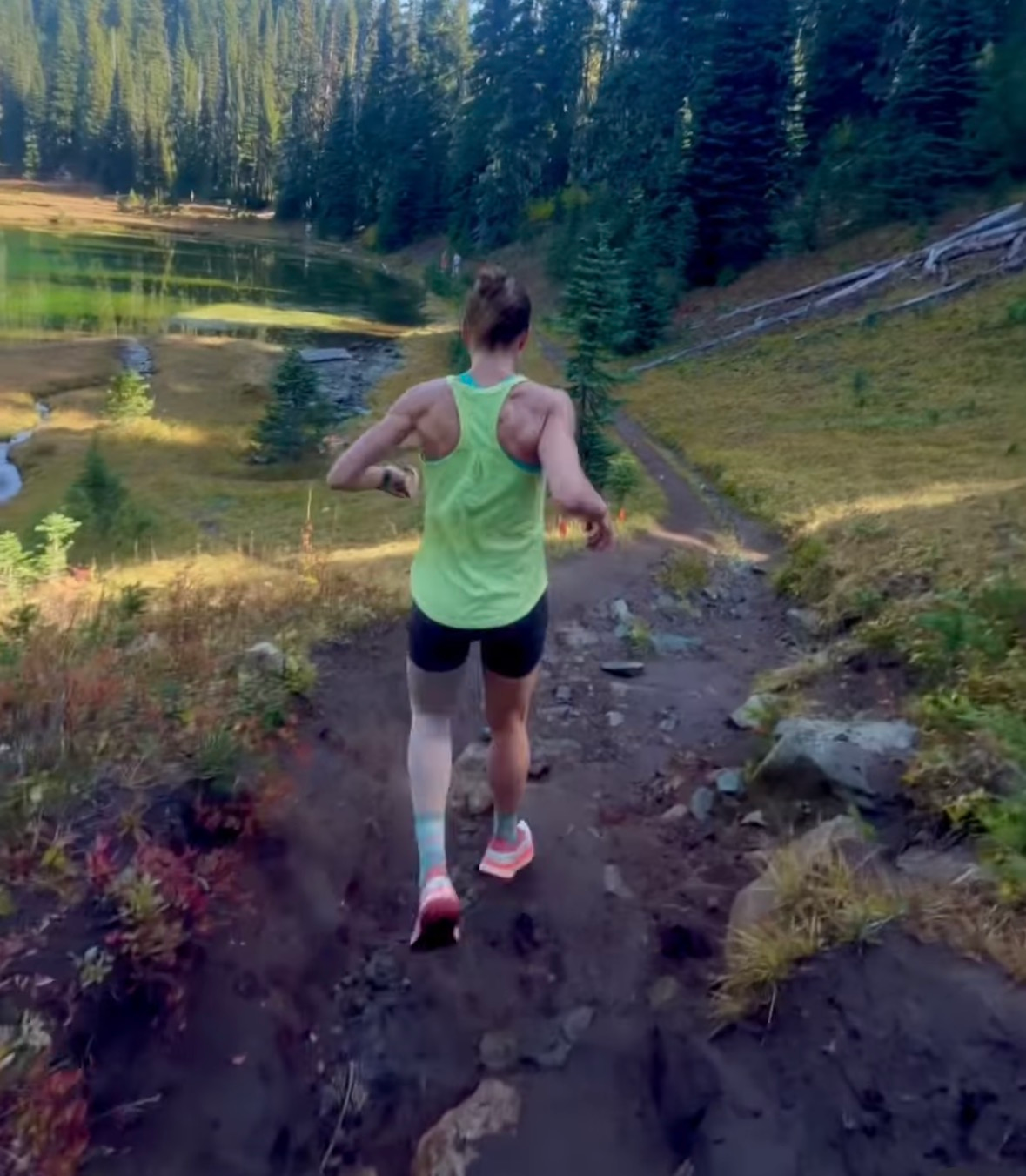
I’ve had a lot of time to process Parkinson’s affect on my running over the past year and I figured I’m at a place where I am finally ok to share some of this. Running is a sport I have loved for over 35 years. Running has always been a source of one of my greatest joys, my go-to coping mechanism, and my favorite thing to do anywhere in the world. At many times in the past several years it has felt like Parkinson’s is so unfairly stripping this away from me, at a time when I need it most.
All the Feelings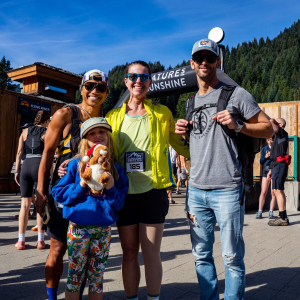
For months after my diagnosis every Sunday I would ride my bike along the coast. My legs worked well on the bike, unlike my awkward run stride, so it was an enjoyable activity. But every time I saw a runner I was angry. This was problematic because on the coast on the weekend there are a LOT of runners, and I didn’t want to be angry. I was angry because I figured the person I saw running probably wasn’t enjoying their ability to run. I was angry that I wasn’t running effortlessly. I saw photos of my friends running and got sad. My husband would go to a race or out to run, which I encouraged him to do and he needed to do, but it was hard. I missed running with my old run friends. And yet I also realized to get to the other side I needed to go through all these feelings. And then finally one day on my bike ride I passed a runner and enjoyed watching them run, without being angry.
Dark Closet Runner
I went through a period of about a year where I was absolutely mortified if other people saw me run. I had developed an awkward stride which often resulted in people I didn’t know stopping me and asking if I was injured. It was kind of them, but all I heard was “You look really strange when you run!” I had a disability and I looked like I had a disability. I fell in love with the safety of darkness on my 5am runs. Nobody saw my slow and awkward start to the run. Nobody saw my weird arm swing or looked at me as if I was a crazy person who was injured but refused to stop running. It was isolating, but felt very safe. Over time I got brave and when someone asked “Are you injured?” I just laughed and replied “Oh no, I have Parkinson’s and always run like this – would you believe it’s actually working well today?!” It left me feeling a bit happier and most people applauded my efforts.
 Sing Like an Opera Star!
I spent multiple months trying to keep my foot dystonia from kicking in at the start of a run. I tracked what I ate, how much dopamine I took before a run, how much time the dopamine had to actually start working before I ran, what warmup I did, and on and on and on. I had charts and graphs and variables I tracked. I read up on dystonia and how to best get rid of it once it kicks in. I learned getting angry at dystonia makes it worse. I learned singing loudly helps it go away. And if singing doesn’t make it go away it’s pretty hard to be angry at your foot that isn’t working when you’re pretending to be an opera star on the side of the road at 5am. So I sang, and I laughed at the absurdity of my disease. And I made small changes. And over time I had less and less dystonia run disruptions. This felt like a gigantic win!
Medication Learning Curve
For someone who never took medication at all, after diagnosis I had to get used to not only taking medication every day, but learning how and when to take it. My body doesn’t make enough dopamine and thankfully science is amazing and there are dopamine pills I can take. It doesn’t fix the Parkinson’s, but it helps a lot with symptoms and it helps me run better. I learned to play around with my dopamine doses and figure out when to take a 1/2 tablet more for a longer, harder run. And sometimes this doesn’t work – several times I have taken my dopamine dose and it makes me so nauseous I throw up before I run. Thankfully when this happens it seems my body still ingests the dopamine before I throw up because each time it has happened I ended up having a decent run anyway.
Changing Motivation
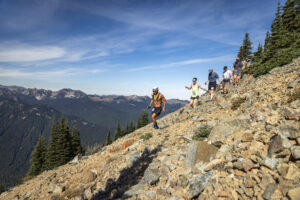 For many years I raced at a high level and was continually motivated by the process of training hard and making small gains. One of my favorite parts of racing was putting in the work and eventually seeing results. Parkinson’s does not follow these rules. All of a sudden I found myself working harder than ever and getting slower, regressing, and making zero progress. It is completely demotivating. In the spring after a particularly difficult run I started asking myself “WHAT is the freaking point?!” I could swim or do a number of way easier-to-do-with-Parkinson’s sports. Except I do still love running. And I know what the freaking point is – excercise is the #1 best thing you can do for Parkinson’s to slow the progression and help symptoms. I also knew if I walked away from running I would feel like I had let Parkinson’s win, so it was not an option for me.
So I decided I needed a new goal. Maybe a race? Except there was that small detail that I was still fairly terrified of anyone watching me run. Therefore voluntarily putting myself into a group run with other people and spectators sounded like a nightmare. But a trail race could work. Nobody spectates at trail races. And the other racers are too busy looking at rocks, roots, or catching their breath to look at me. Perfect!
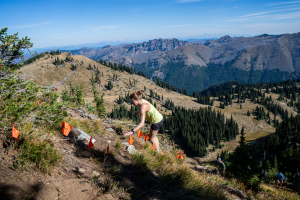 I picked out an 8 mile trail race in Washington with 2,600 feet of climbing. Not too long, but sufficiently hard to feel I had accomplished something. The race had a climbing cutoff – you had to make it past the top of the gondola (3.5 miles, all the climbing) before 1.5 hours or you would get sent down the gondola – the ride of shame! Although running is often really hard for me, I’m fairly good at power hiking and after doing some math I thought I could make this cutoff. It scared me, but it seemed like a good challenge. Now I just needed a wingman. Enter Kiet, BFF extraordinaire, one of only two people who were present at Eric and my wedding ceremony mid-run, and one of my favorite people on earth.
As summer got muggy and hot I learned another one of the fun side effects of Parkinson’s is trouble regulating body temperature. My running got even slower. But having that little goal kept me going. I played around with some steep hill hike up / run down workouts that were actually fun.
Trail Race
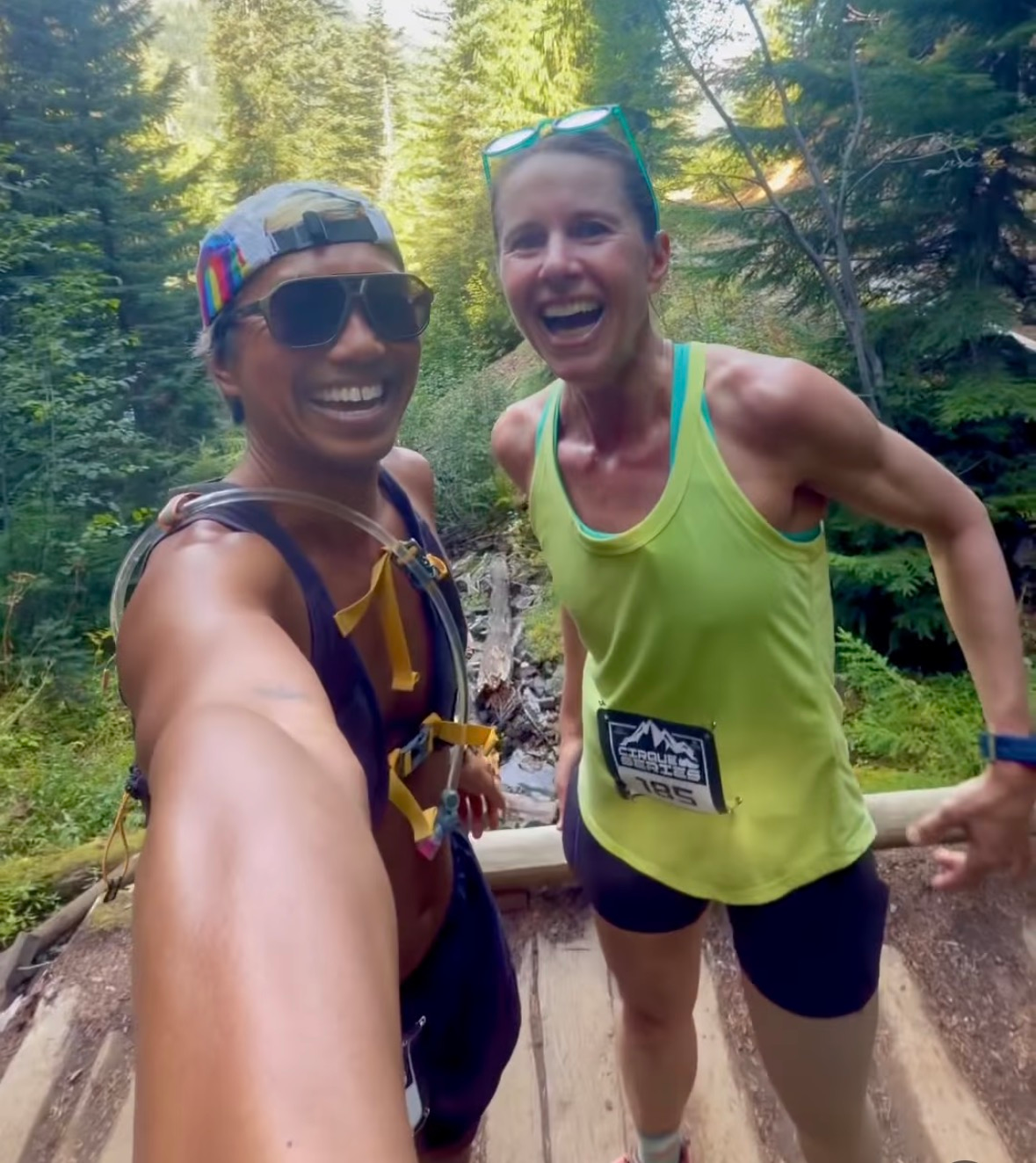
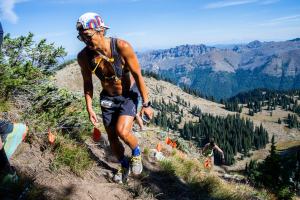 It had been 7 years since I entered a race. I had zero goals other than to finish, have fun, and seeing as Parkinson’s makes me a tripping hazard, try not to face plant on the trail. Kiet and I had last raced trails in Austria together, and I knew we would have a blast no matter what. Turns out the race format was perfect for me. When I run it can take up to an hour before I’m warmed up and my leg even starts working a bit better. Since this race started with a steep uphill climb, by the time I had power hiked to the top I was warmed up enough that I could run almost all the trails down. It was really fun to see my husband and daughter at the top of the mountain, and again at the finish where she got to run the final section with us.
I tend to do best with uphill and downhill – flats are hard. This race had almost no flat ground, so that was great. The race was so fun – I felt normal, I felt strong, and I felt like I could compete even with my leg not always working, and the terrain was beautiful. I didn’t finish last, and I didn’t fall. It made me feel more alive than I have in months. In the end we finished under 2 hours, which was faster than I had thought possible.
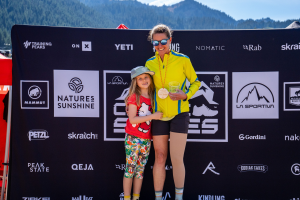
I was awarded the Lexie Award for being an inspirational runner. This was a really nice acknowledgement of how hard running with Parkinson’s is and if somehow I am inspiring someone else to get outside and run, this makes me happy.
The Shift
Probably the best part of the race was the shift I felt in realizing I can still do these things I love. I don’t have to give up running or racing. I can get over my fear of looking weird when I run. I can fly downhill on a trail without tripping. I can laugh at my BFF as he is cursing because we are going up an insanely steep hill, and this was my idea of fun. I am still the same person, I just have a leg that I often have to drag along for the ride. I plan to carry this shift into some new running goals, some of which definiteily scare me, but if they help me to keep showing up then I think they are perfect.
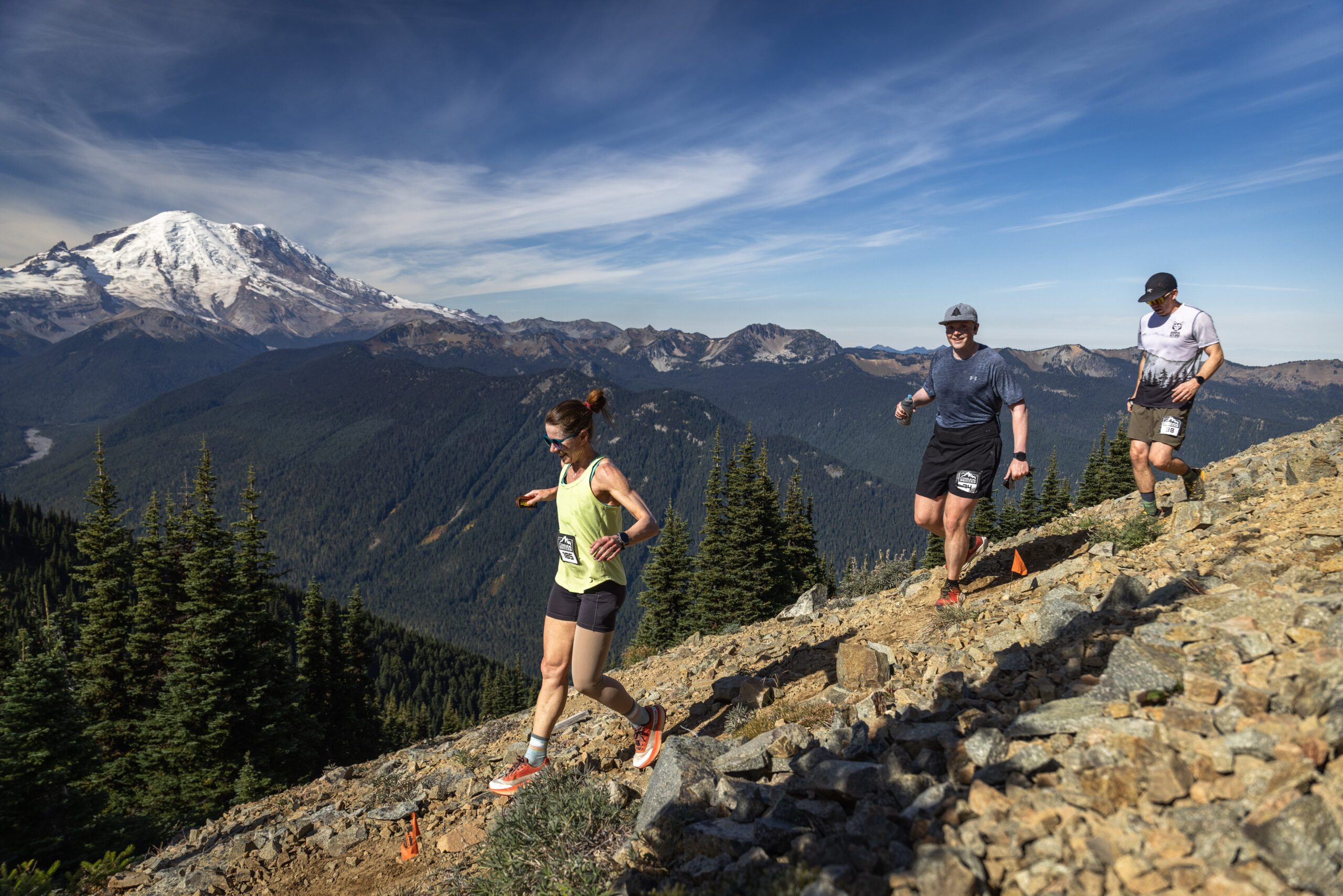
Photos: Kiet Tran, Rocko Menzyk and Brady Rufner at Cirque Series Crystal Mountain.